
Spanish & Portuguese
CC Program in Latin America
Spring 2027: México & Brasil
More Information Coming Soon...
Please contact Professor Naomi Wood (nwood@coloradocollege.edu) with questions.

Get more information about the CC Program in Latin America, an immersive program that takes you from Yucatán, México (Blocks 5–6) to Bahia, Brasil (Blocks 7–8). This two or four‑block experience is designed for students ready to deepen their language skills and engage with vibrant cultures. The program requires placement into SP305, and priority is given to majors in Hispanic Studies, Spanish & Portuguese, or Romance Languages, as well as minors in Spanish, Luso‑Brazilian Studies, or Latin American Studies. Come discover how you can turn a semester abroad into a meaningful step toward your academic and personal goals!
Spring 2026: México & Brasil
The CC in Latin America program offers students a unique multidisciplinary experience abroad.
Starting academic year 2025-2026 the Spanish and Portuguese Department will be offering the CC in Latin America semester in the Spring semester. Blocks 5-6 will be taught in Yucatán, México and Blocks 7-8 in Salvador, Brasil. Prerequisite for the program is placement into SP305 and priority is given to students majoring in Hispanic Studies, Spanish and Portuguese, or Romance Languages or minoring in Spanish, Luso-Brazilian Studies or Latin American Studies
Minimum prerequisites: SP201 or placement into SP305.
This is intended as a four-block program, however, students may apply for study in one country for two blocks.
All courses count towards the language requirement. Both PG courses count for the minor in Luso-Brazilian Studies and/or one credit for the major in Spanish. Both SP courses count for the minor or major in Spanish. All courses also count toward the 5-unit Latin American Studies minor (contact a LAS advisor if interested).
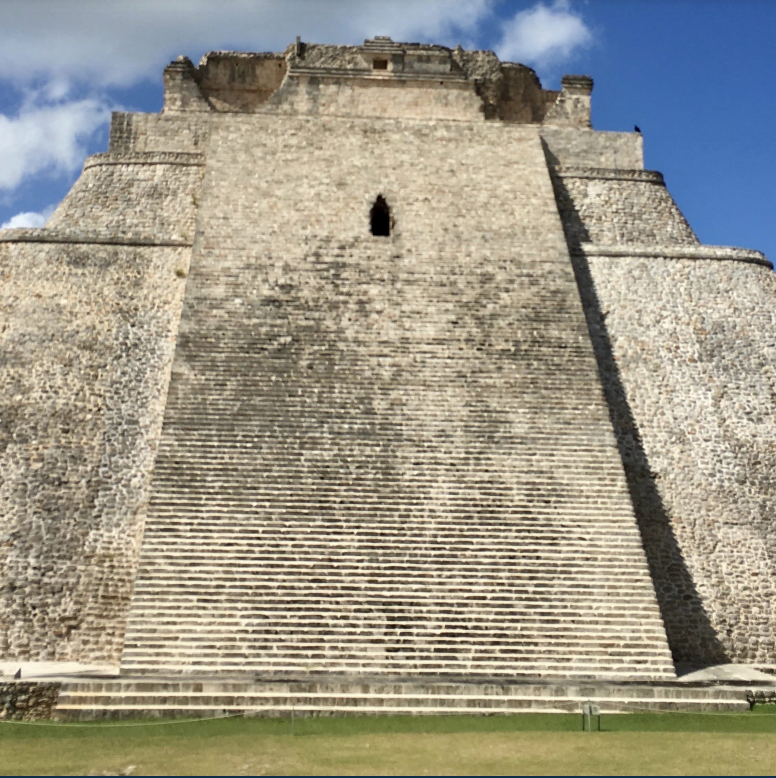
Possible program-sponsored trips: Lençóis, Cachoeira, Rio de Janeiro in Brazil and Chetumal, Campeche and Chichén Itzá and Uxmal archeological sites and adjacent Maya communities in México.
Application Deadlines & Process: Information sessions with course descriptions, deadlines, and interview information will be September 8th. Interviews begin March 1st on a rolling basis.
Its not too late to apply, so please contact Professor Naomi Wood with questions!
Apply on Summit here.
Other questions? Please contact Prof. Wood, Program Director at nwood@coloradocollege.edu.
Course Info 2026
Block 5 '26 • SP307/MA110
SP307 “Resiliencia Maya: Saberes Ancestrales a través de Matemáticas, Ciencias y Medicinas”, Professors Jessica Sánchez Flores, Rebecca Garcia
Arrival in Izamal, México:
In this course, we will highlight how Maya creators and intellectuals are reshaping different STEM fields, demonstrating the resilience and vitality of their knowledge systems in the present day. The presence and contributions of Maya Yucatec communities in the fields of mathematics, science, and medicine is not part of a glorified past, but living practices that continue to thrive today. The ancestral knowledge of the Maya people has long resisted and challenged ongoing forms of colonialism, land dispossession, and cultural erasure. In this class, students will read and analyze literature and art that highlights the Maya contributions to STEM, learn systems of mathematics used by the Maya, visit archaeological sites, engage in conversations with local healers, and bee protectors. Students will engage in hands-on experiences that bring these practices to life.
• MA110 fulfills the Scientific Investigationof the Natural World Gen Ed requirement.
• SP307 fulfills the Analysis and Interpretation of Meaning Gen Ed requirement.
• Fulfills 1 unit of the language study requirement.
• Fulfills 1 unit of the language study requirement.
Block 6 '26 • SP312
Block 6: SP312 “Writing Practice Abroad”, Professor Jessica Sánchez Flores
In this course, students will build on the material learned in the previous block, deepening their exploration of diverse cultural expressions by contemporary Maya Yucatec creators, intellectuals, and activists across the Maya region of the Yucatán Peninsula. Throughout the course, students will engage in analysis and writing across various formats, from critical essays to blog responses. Students will also engage in a process of unlearning to better understand the intellectual contributions of Maya creators. Overall students will examine how Maya knowledge and practices have responded to systemic structures of power and oppression, showcasing their continuing practices and existence as a form of resistance.
• Fulfills the Critical Engagement throughLanguage Gen Ed requirement.Fulfills 1 unit of the language study requirement.
Block 7 '26 • PG300
Block 3: PG300 Portuguese for Spanish Speakers, Professor Naomi Wood
Arrival in Salvador, Brazil:
Through an immersive language experience, students will study Brazilian Portuguese language and Bahian culture. This is an accelerated introduction to Portuguese language. Students with intermediate level Spanish, French, or Italian are eligible. Students who have studied Portuguese language prior will be placed into a higher level language section. Prerequisite: SP201, placement into SP305, or Consent of Instructor.
• Fulfills 1 unit of the language study requirement. Fulfills the Critical Engagement through Language Gen Ed requirement.
Block 8 '26 • PG308/SP316
Block 4: PG308 “Ciência ancestral: Technologies of resilience and liberation”, Professors Naomi Wood and Ángela Castro
This course will study quilombola communities’ histories and contemporary manifestations in Brazil with special attention to technologies of resilience and liberation in Bahia. Quilombola communities are complex configurations formed from formerly enslaved Africans and relatives of those original members. The land that these communities inhabit is disputed and their historical and cultural importance is essential for understanding contemporary Brazilian culture. Students will study the methods and technologies of resistance used by quilombola communities through multidisciplinary arts, spirituality, and land/environment and will be guided to make connections to cimarronaje as it is found in other Latin American nations.
• Fulfills 1 unit of the language study requirement. Fulfills the Analysis and Interpretation of Meaning Gen Ed requirement.
Report an issue -
Last updated: 02/19/2026