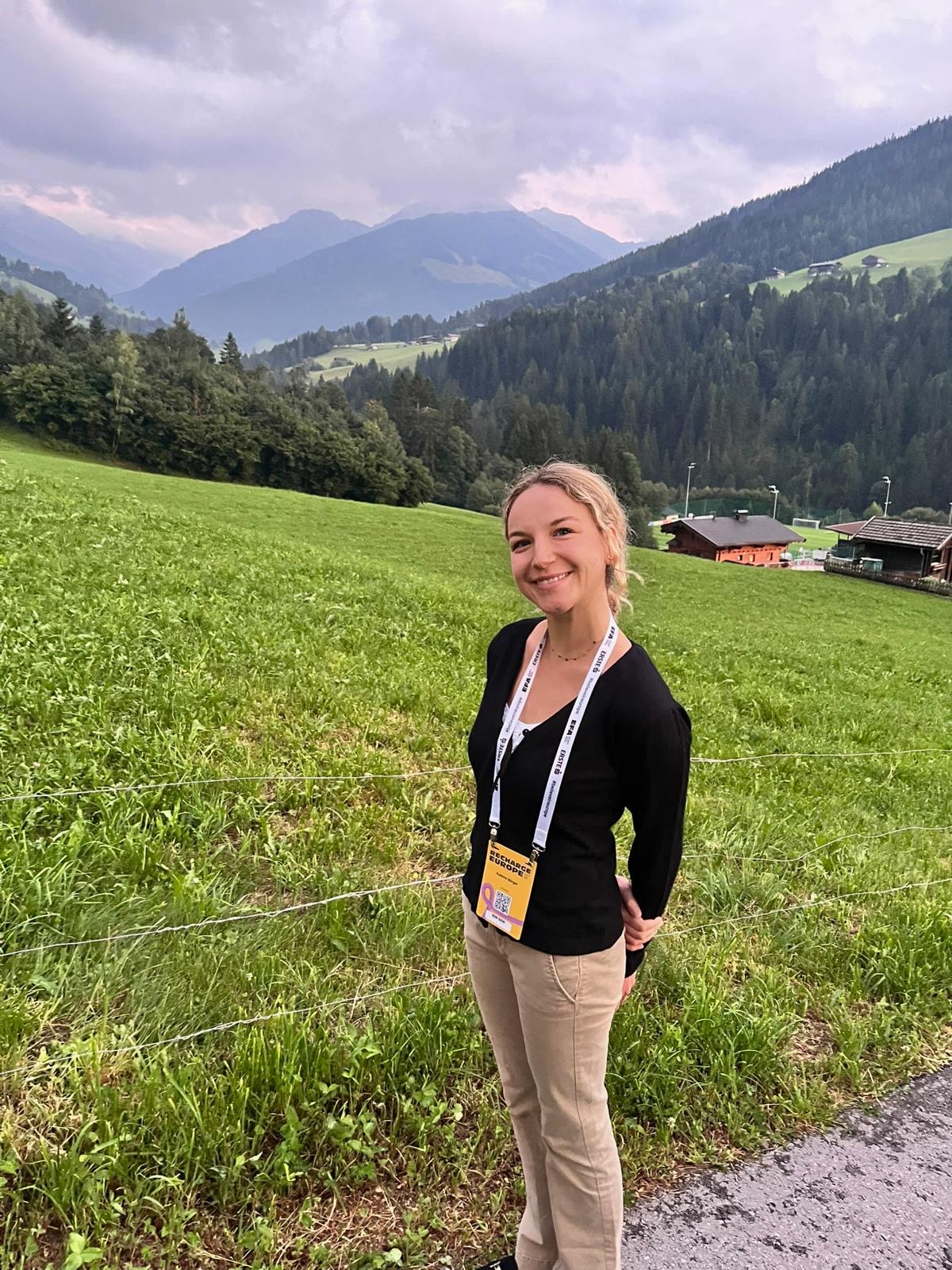
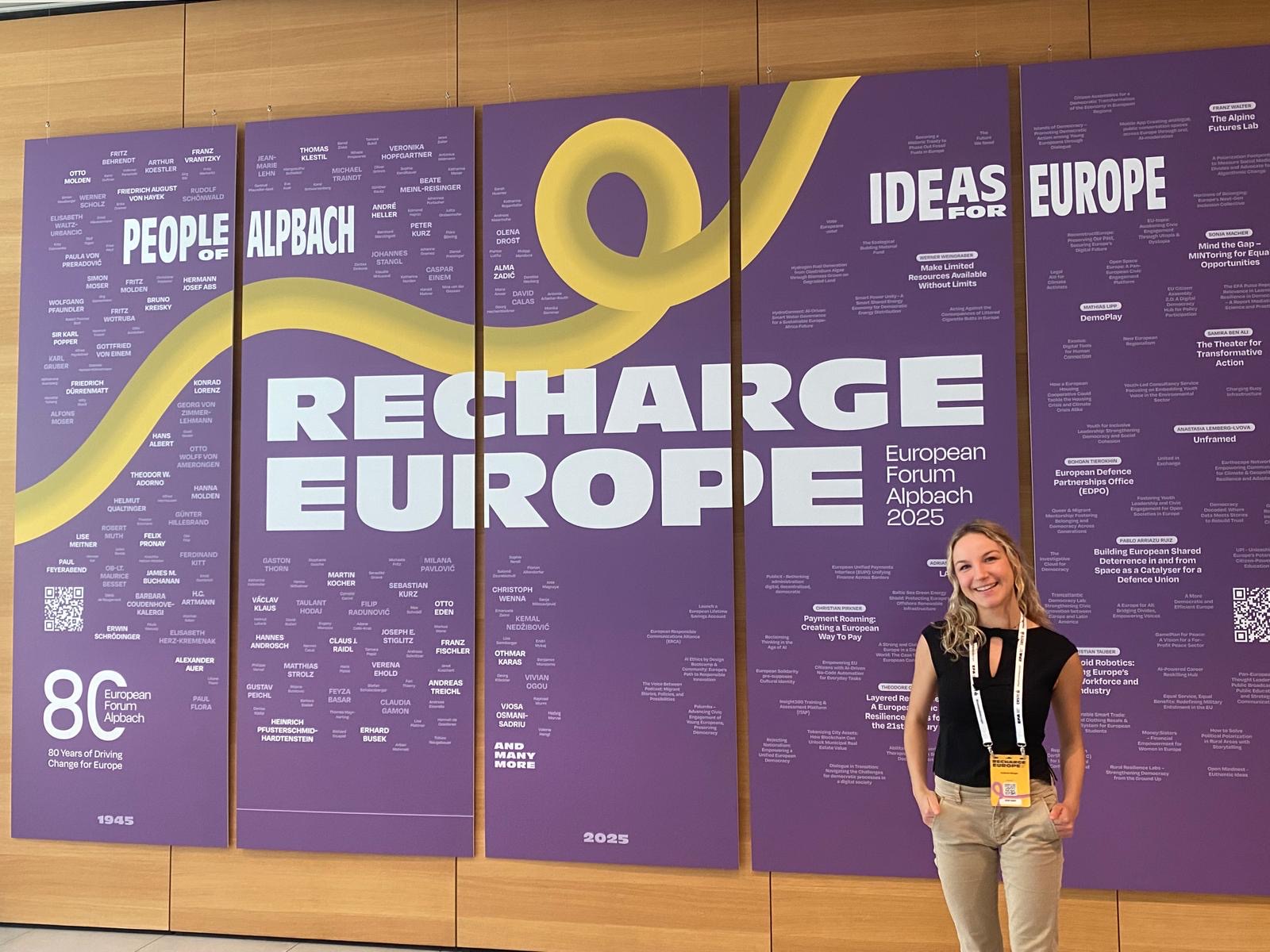
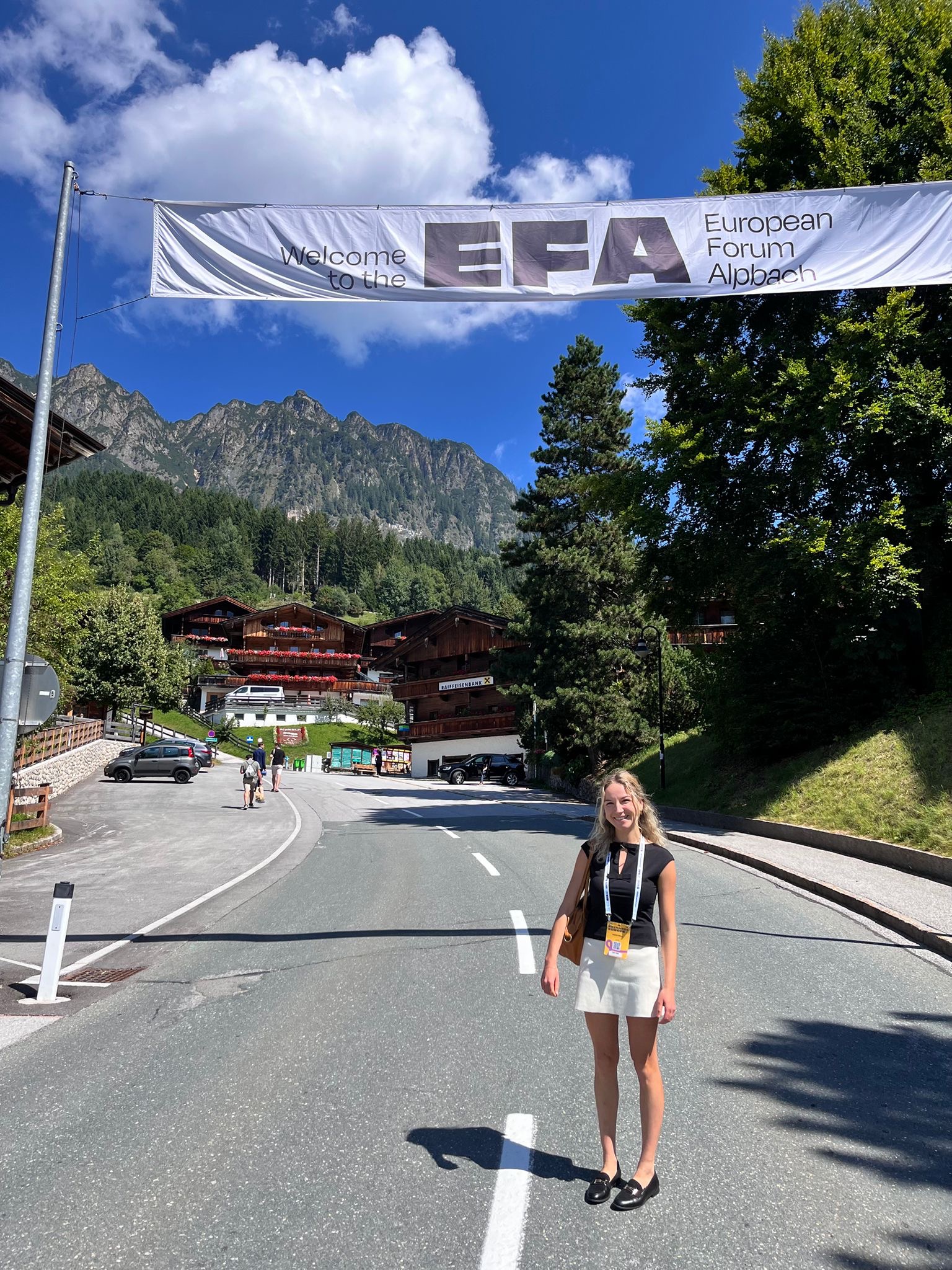
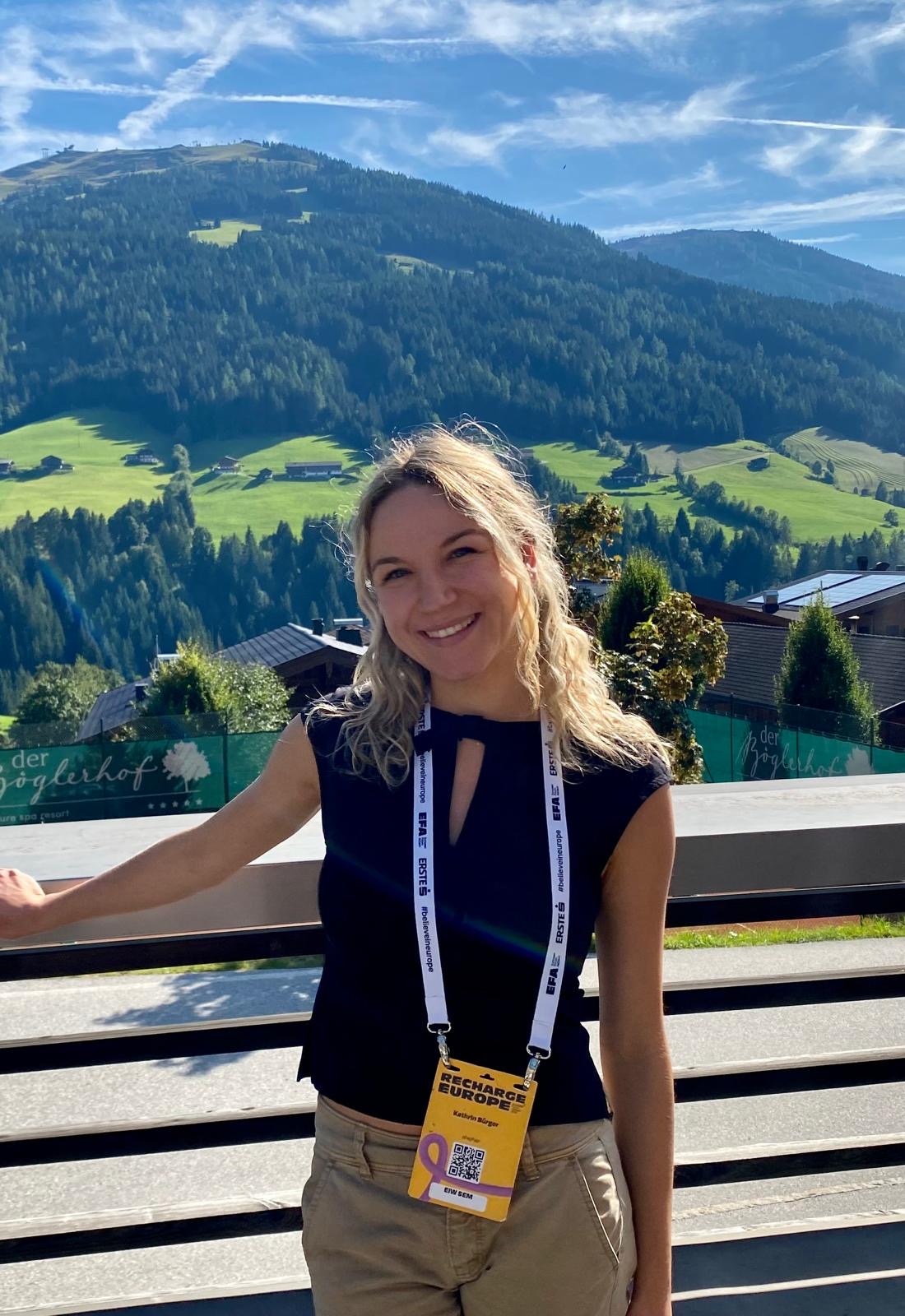
As an international student from Austria studying International Political Economy, Kathrin Bürger ’27 was determined to attend the 80th European Forum Alpbach (EFA25), which took place in Tyrolean Alps, Austria, last August.
“It was inspiring to connect with fellow participants from diverse fields and to expand my professional network through the Forum’s unique design, which actively fostered dialogue with decision-makers,” Bürger says. “The Forum has also sharpened my critical thinking skills and enhanced my ability to identify key indicators of change when analyzing current events. This proves useful for understanding how developments might influence Europe’s trajectory and in anticipating the direction in which Europe might be heading. I am grateful that this Forum fostered dialogue between experts and the public, bringing together EU citizens and international perspectives to shape the future of Europe.”
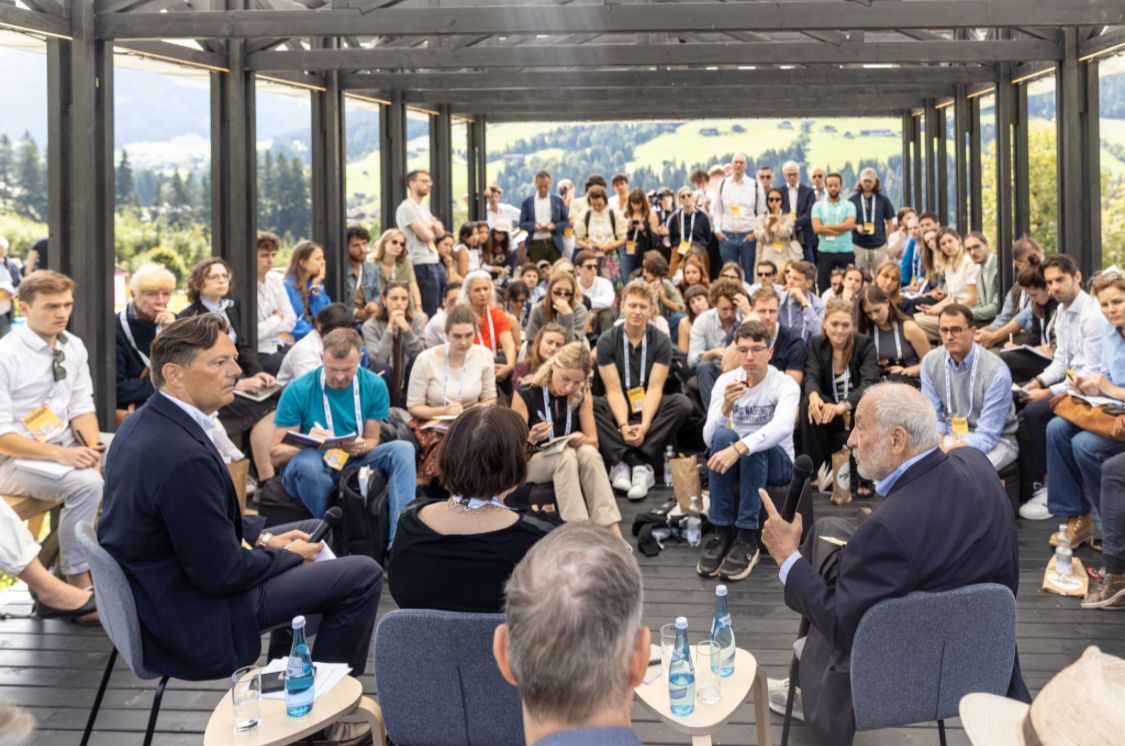
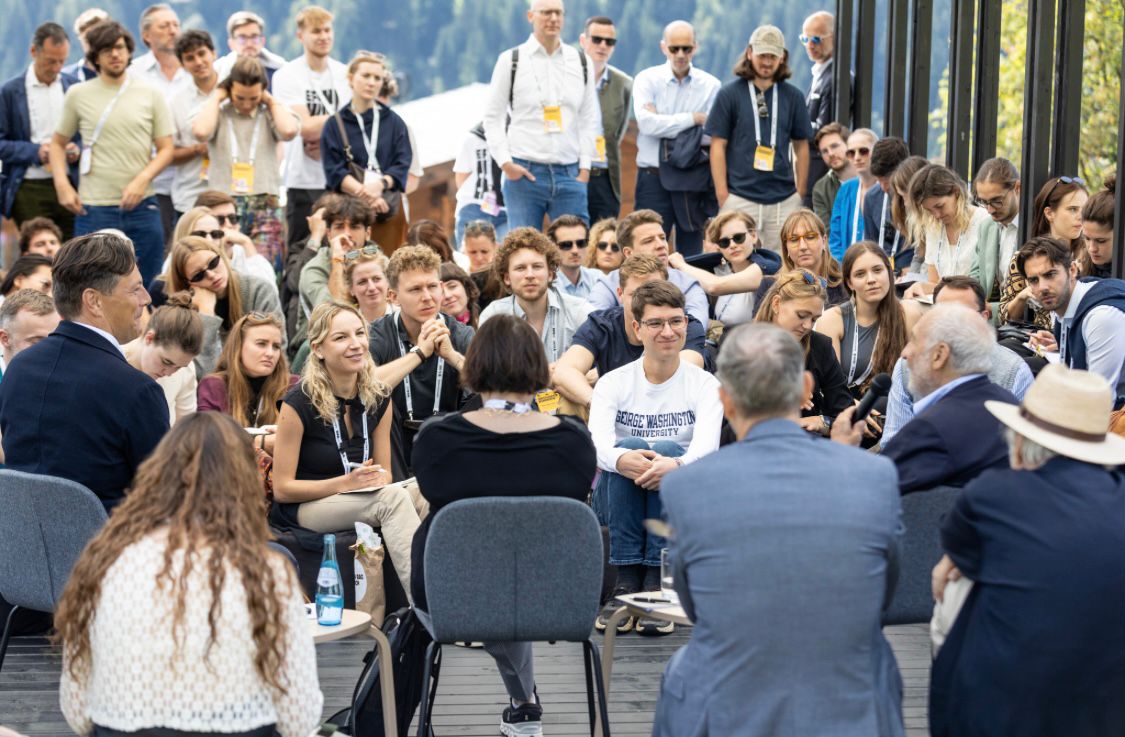
Every year since 1945, the European Forum Alpbach brings together leaders from different businesses and civil societies, and students, academics, and visionaries to discuss the future of a strong, united, and democratic Europe. EFA was founded at the end of World War II, and surrounds a central question: What kind of Europe do we want?
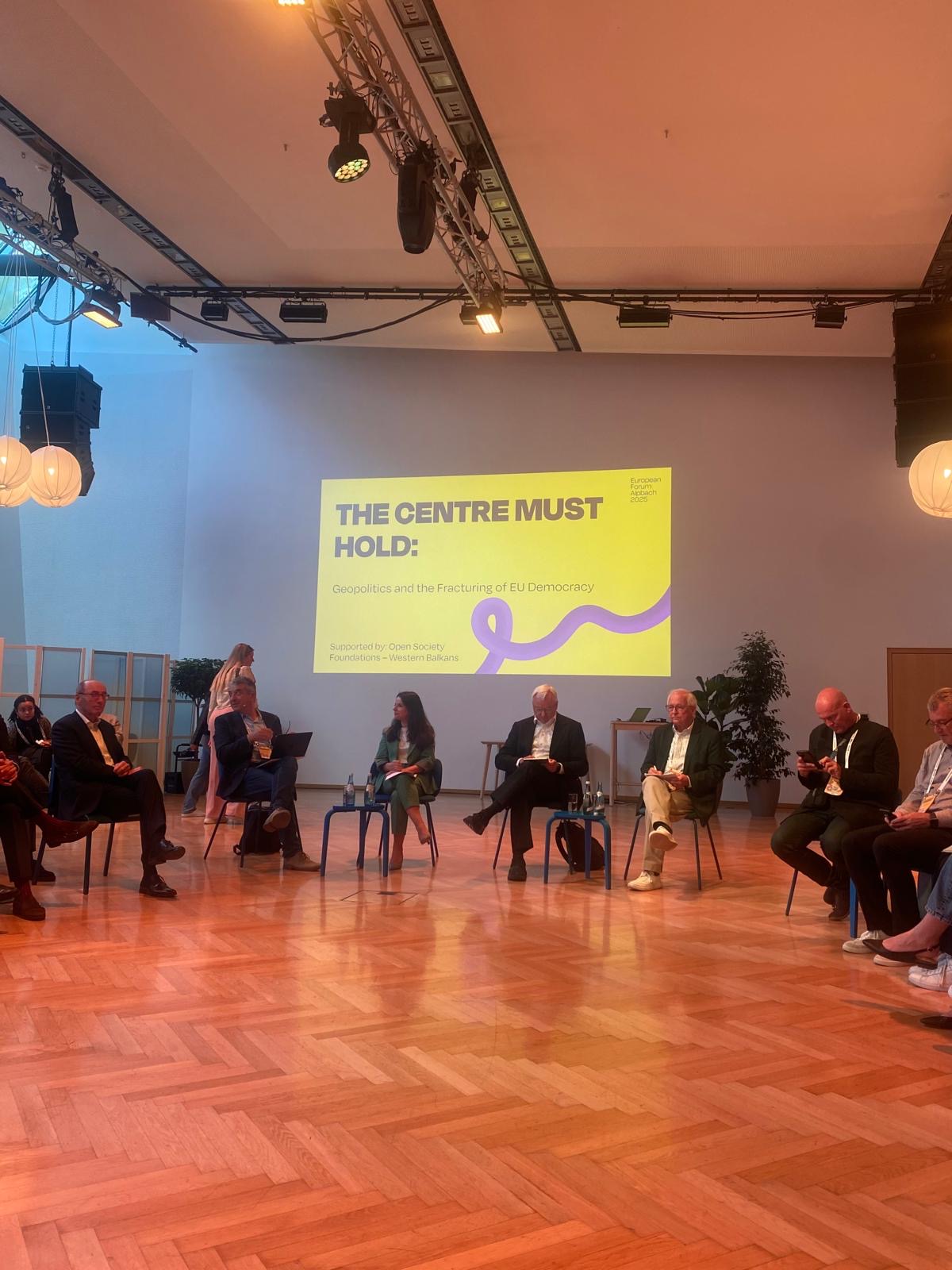
Last year’s theme was “Recharge Europe,” where participants discussed European governance challenges like democratic backsliding and increases in polarization.
“Europe is currently experiencing more simultaneous crises than at any other time since 1945,” EFA President Othmar Karas said in a January 2025 press release. “That is why we need a bold vision to make Europe more competitive, capable and innovative. According to the motto ‘Recharge Europe’, we want to provide Europe with new energy for the challenges ahead so that the EU can once again take on a leading role globally.”
Bürger says the increase in populism and democratic backsliding across Europe can be explained by a variety of factors.
“Among them is the growing disconnect between politicians and the public, as political leaders often fail to resonate with citizens’ concerns and demands,” she says. “This disconnect is evident in electoral patterns that show a pronounced urban-rural divide. Under this year's theme, discussions also revolved around ways to strengthen and unify Europe from within. This can be achieved not only through more efficient engagement with electorates, thereby reducing internal fragmentation, but also through strengthened multilateral collaboration throughout Europe.”
Bürger says she learned that Europe needs to work towards a higher readiness of cross-European collaboration and pinpoint strategic areas for specialization, such as investing more heavily in the technology sector.
“EU Special Representative for Human Rights Kajsa Ollongren described the process of investing in common causes such as technology as essential to combat continued fragmentation and perhaps European disintegration,” Bürger adds.
Bürger’s goal at the Forum was to explore the intricacies of the challenges facing European countries and the EU and to consider how Europe can grow stronger, more united, and anticipate future issues.
“I aimed to understand decision-makers’ analyses and learn how faster, more informed decisions can be supported through enhanced cross-sector collaboration,” she says. “As a European citizen I feel a strong responsibility for addressing our continent’s most pressing challenges. EFA provided me with a space to test my ideas and develop new approaches to address these challenges collaboratively with fellow participants from different fields as well as EU Diplomats, UN Representatives, Nobel Laureates, and Research Fellows.”
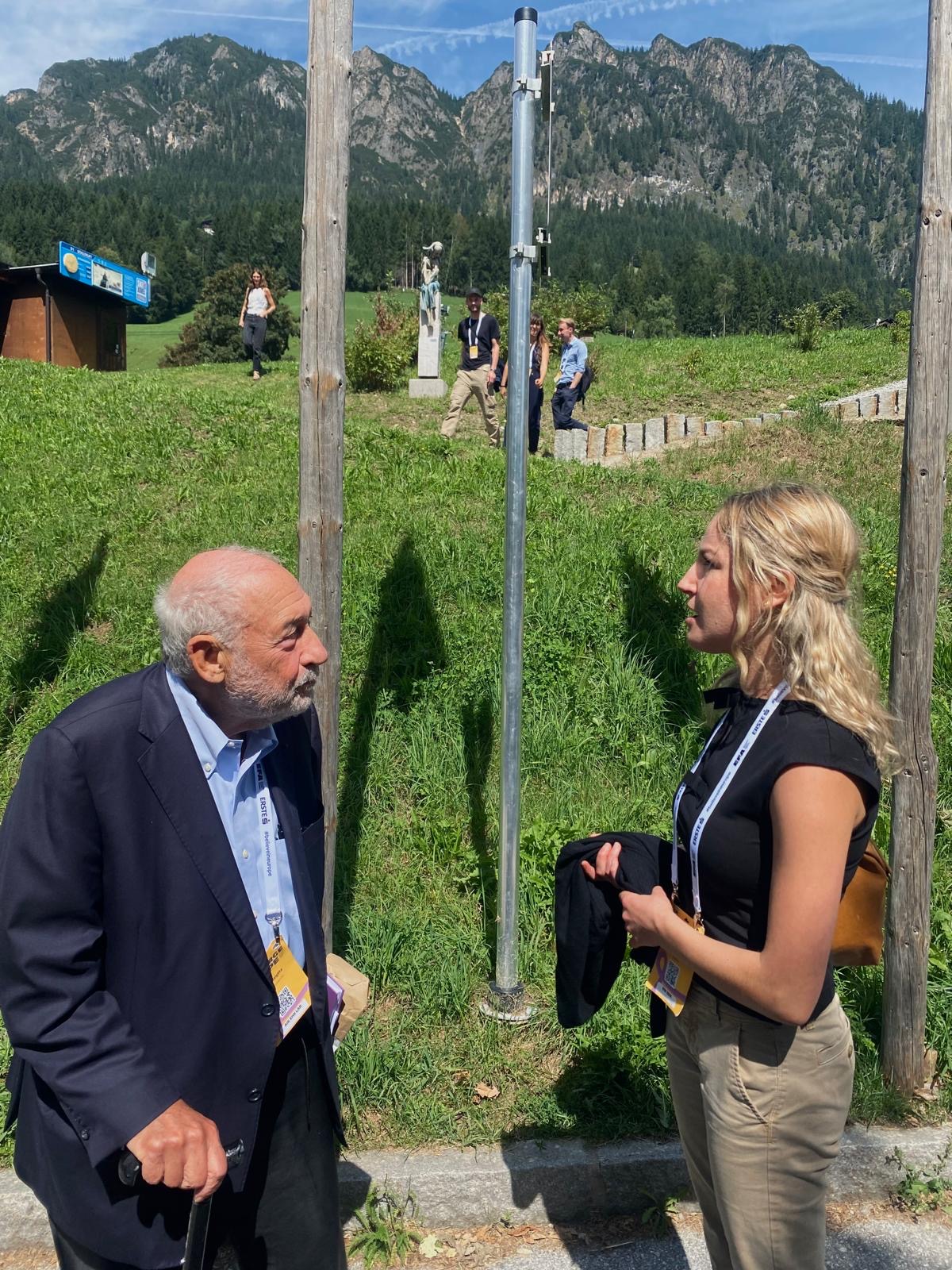
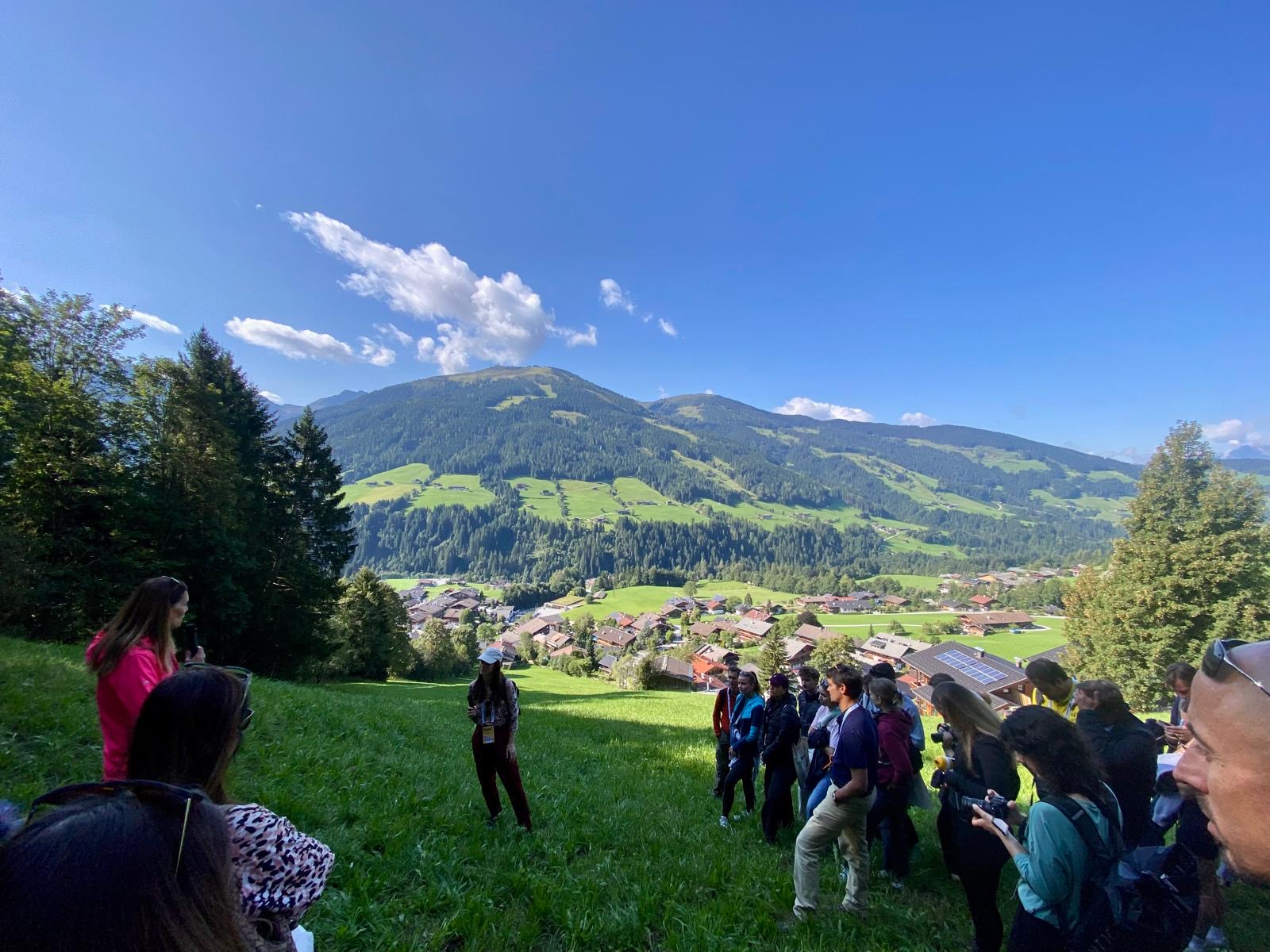
During a hike in Alpbach, Bürger was able to talk to Former Prime Minister of Sweden, EU Special Envoy and Co-Chair of the European Council on Foreign Relations Carl Bildt about the drivers of political radicalizations within Europe and the continuous fracturing of electorates.
“On the topic of political radicalization and the increase of populism in Europe, we discussed potential EU-specific regulations on digital extremism, including rules on algorithmic transparency and evaluated the ideas developed during our brainstorming session,” Bürger says. “Through the Forum, I have gained a deeper understanding of the EU’s complex infrastructure, clarified the direction I want to take in the future and emphasized the importance of anticipating emerging challenges.”
During the first week, Bürger participated in the “Geoeconomics - The New Balance of Power” seminar, where they analyzed economic tools and their impact on global trade flows including, tariffs, embargoes, foreign direct investment, sanctions, trade restrictions, export controls and foreign aid.
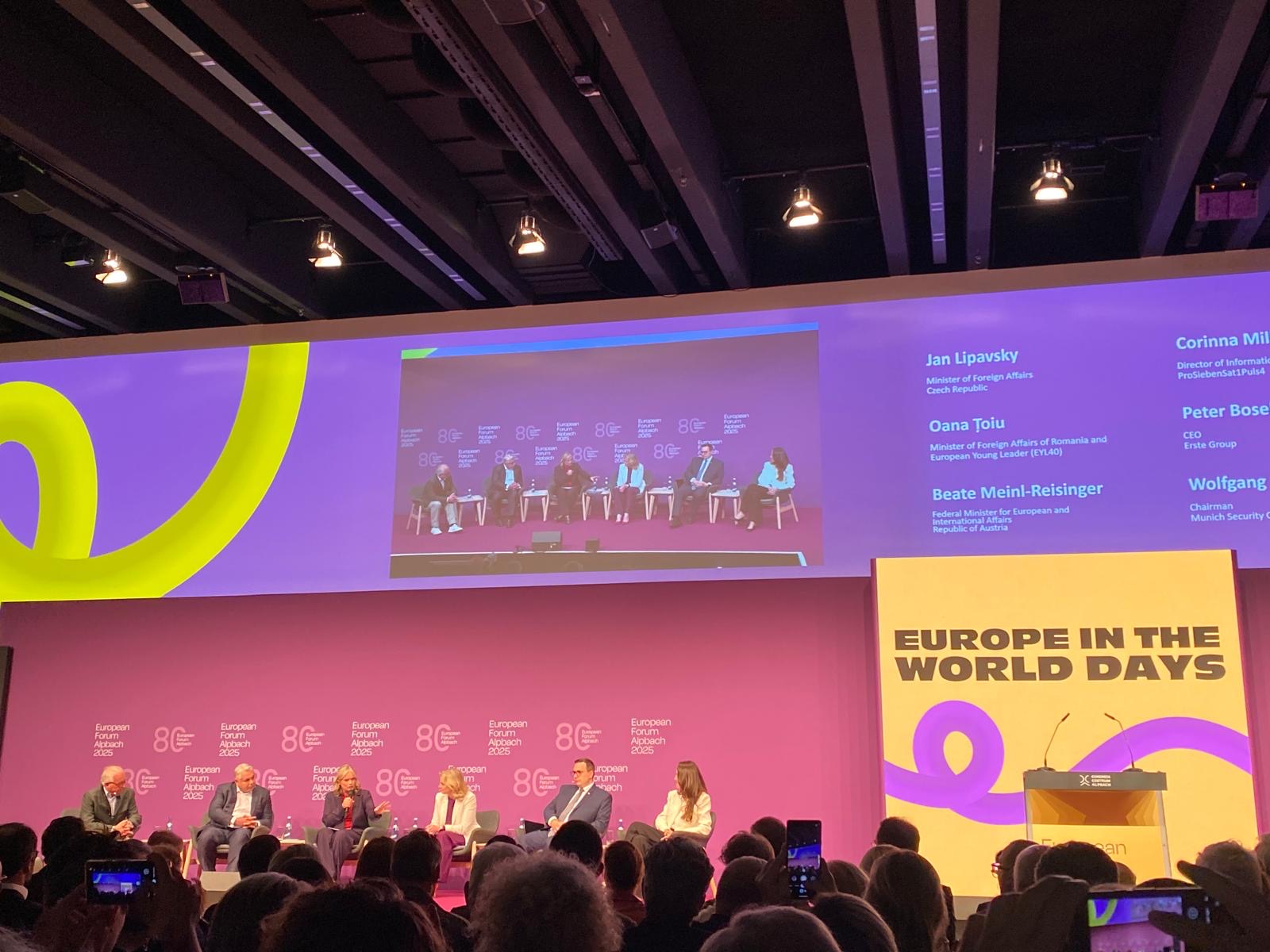
One of Bürger’s favorite parts of the experience was the Europe in the World Days, where she got to talk with Nobel Laureates, policymakers, and CEOs on Europe’s repositioning within the shifting global landscape.
Over 4,700 participants from 127 countries participated in EFA25. There were over 550 sessions at EPA25, where participants discussed how Europe can renew its economic, social and institutional strengths in order to remain capable of action and prepared for the future.
Bürger applied for a Political Science Research Grant and was able to attend EFA25 with funding from the Political Science Department. Mathematical Economics major Emmet Shuman ’26 also attended the Forum.
From the first time she stepped on campus, Bürger has been an engaged student, always trying to help others and to make a difference. As an International Student, Bürger knows what it is like adjusting to a new country, so, last year she worked as an International Student Mentor and served on the International Student Advisory Board. She was also the president of the Model United Nations Club on campus and now serves as the Assistant Secretary General for Academics at the London School of Economics and Political Science (LSE).
Bürger is spending the year studying abroad and attending LSE, where she takes classes in the International Relations Department. She says the valuable conversations with fellow attendees at EFA25 inspired her to take a Government, Politics, and Public Policy in the European Union class at LSE. Bürger will resume her positions as an International Student Mentor and on the Advisory Board this semester.
“I am interested in pursuing a career within international organizations or the foreign service and EFA provided me with deep insights into how supranational institutions such as the EU operate and the factors that inform their decision-making, by learning from leading experts first-hand,” Bürger says. “I have a strong interest in global affairs and passion for understanding how trans-national institutions, state and non-state actors such as international organizations and Multi-National Cooperation shape current politics and I am thankful to the Political Science Department for the opportunity to attend the Forum.”