
Alumni Spotlight Archive
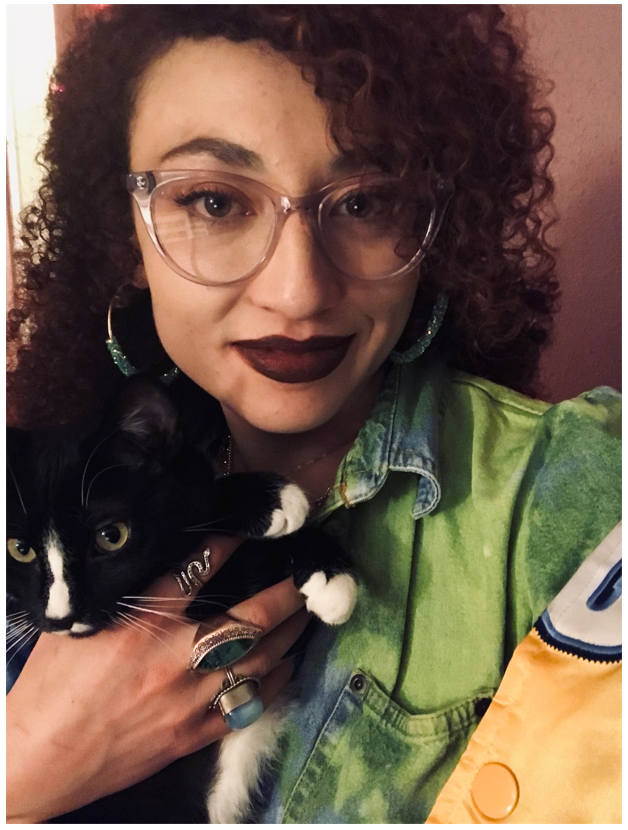 Jazlyn Andrews, a member of Dr. Heidi R. Lewis’ 2015 #FemGeniusesinBerlin, graduated with a degree in Feminist and Gender Studies from Colorado College in 2017 and currently works as a freelance writer in Denver, CO. You can find her work on Book Riot and Function of Beauty. She recently co-edited In Audre's Footsteps: Transnational Kitchen Table Talk with Dr. Lewis and Dana Maria Asbury. In Audre’s Footsteps honors Black radical traditions set forth by W.E.B. Du Bois, Rev. Dr. Martin Luther King, Jr., Dr. Angela Y. Davis, and Audre Lorde, all who were intellectually influenced by their experiences in Berlin.
Why did you become a Feminist & Gender Studies major?
I don’t necessarily remember the moment I decided that I wanted to be an FGS major, but I do remember it being a culmination of the class material, the types of conversations and the ways in which they were conducted in the classroom, and the people with whom I was sharing classes. We were often discussing really heavy and complex topics but in ways that were accessible and genuinely fun. The classrooms were challenging and joyous spaces, which was a combination I wasn’t necessarily finding in other departments. As an FGS major your perspective of reality will be probably be shattered many times, but it will be done with the upmost care and in a way that brings forth a sense of renewal. That feeling of being in awe after leaving the classroom or while doing my reading was what kept me inspired to continue with the program.
What are some of your favorite memories of being a student in the program?
One memory that is forever burned in my brain is of Heidi literally running around our FYE classroom performing her rendition of some song from Beauty and the Beast to show us how warped many of the stories we consider “romantic” are. Actually, that may have actually been the moment I decided to major. There are so many funny and joyful memories flooding my mind right now, but taking Heidi’s class in Berlin, “Hidden Spaces, Hidden Narratives: Intersectionality Studies in Berlin” probably takes the cake. The class itself is an example of building transnational bonds but it was also invaluable to be a part of sessions that were conducted by artists, activists, and educators who are taking feminist frameworks and applying them in their work. It was one of those moments where I went, “Oh, okay, so this is possible.” It really expanded my expectations for what I could potentially do after leaving CC.
You worked with Dr. Heidi R. Lewis, who was also your academic advisor, on her book, In Audre's Footsteps: Transnational Kitchen Table Talk. What was that like?
Heidi has always been champion of students and is never shy to share opportunities, which is not the type of support you’ll find at just any college or in just any department. I’m still figuring out the words to describe this experience, but in short it was an absolute honor. Heidi will forever be one of the most important teachers and mentors in my life, so to be able to work with her on In Audre’s Footsteps: Transnational Kitchen Table Talk was a bit surreal. One thing that people often ask FGS majors is, “What are you going to do with that?” This book, in part, offers an answer to that question. Throughout the book’s conversations, it is impossible not to see how one’s politics are deeply embedded and interwoven with one’s intimate personal life. It can be a little bit jarring to take what you’ve learned in the classroom and apply it to other areas of your life, whether that’s your job or relationships. One thing I really appreciated about being able to work on this project was recognizing that we are all experiencing that jarring feeling to a certain extent. The conversations that Heidi, Dana, and the contributors have with one another are such a guide for how to create space for oneself and community while negotiating systems of oppression. To be able to work on this project in the midst of COVID, a very isolating time of uncertainty, was particularly special. Don’t get me wrong, it was a daunting task at times to edit another person’s words and stories, but each time I closed my computer I felt as if I had left a group of friends talking around the dinner table. The conversations will haunt you in a way that leaves you wanting them to linger. I think we should all be so lucky to find work that leaves us feeling more whole. With this project, I found just that.
What advice would you give students majoring or minoring in Feminist & Gender Studies? What advice would you give students considering a major or minor?
To students who are majoring or minoring in Feminist & Gender Studies, I encourage you to consider how you want to carve out a space of your own while at Colorado College. Allow yourself the room to make mistakes and don’t shy away from the messiness of this time of your life. Challenge yourself to confront the internal conflicts that arise as you continue your FGS education and don’t strive to be perfect. You will make mistakes and you will continue to learn and grow from this point on, so allow yourself a chance to do so. Folks who are considering a minor or major—do it! No, but really, ask yourself what you want to out of your time at CC. In my opinion FGS is the most versatile degree you can get. It provides you a framework that will guide you in whatever you choose to do after, so I sincerely encourage you to ask yourself what type of education it is that you are seeking right now and how it can carry you forward.
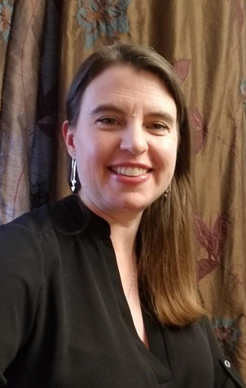 Briana Kerstein Bergeron graduated in the inaugural class of Women's Studies majors in 1998. She joined the Western Organization of Resource Councils as the Development Associate in February 2020, assisting with grant writing, compiling grant reports, and general external fundraising support. Until 2016, she was the Campaign Director for the Western Coalfield Alliance, a coalition focused on reforming the federal coal program, which included the WORC and other regional and national partners. Prior to returning to her hometown of Billings, MO in 2010, Briana spent 7 years in New Orleans working with the Gulf Restoration Network. She has also worked as an organizer for Montana People’s Action, Planned Parenthood St. Louis, and briefly for the St. Louis chapter of ACORN.
Why did you decide to become a Women’s Studies major?
At the time, my personal philosophy about choosing a major was that my actual degree would most likely have little impact on my future work. So, I wanted to choose a course of study I found most interesting and inspiring. For me, Women’s Studies was the clear winner. These were the classes that excited me and never seemed like a struggle. In the years since graduation, pursuing a career that was not just a job, but part of the larger movement for justice, was important to me and a Women’s Studies degree was actually very important for that work. Understanding the roots of injustice, the long history of women’s fight for equality and the ways in which feminism failed to raise up all women in our country were critical to my work in community organizing.
You were a member of the inaugural class of majors in 1998. What was that like? Did you and the others [Blake Hedinger and Christina Pierson] have a sense you were part of a historic moment in the college’s history?
When I first started at the college, you could only minor in Women’s Studies. You had to create your own course requirements and get them approved to receive a Women’s Studies degree. This was the path I took during my junior year and so having the college agree to elevate Women’s Studies to a programmatic level with a major affirmed what I had already known — there wasn’t a need for the extra bureaucracy, and I was pursuing a degree of the same value as any other. I don’t think I fel t I was part of a historic moment as much as I felt like the college was doing something they should have done long before!
Your advisor Margaret Duncombe, who retired in 2010 and achieved Emeriti status in 2014, is what I would call a foremother of the program, as she was instrumental in its creation and committed to its health and growth during her entire 36 years at the college. What was it like working with her?
I was fortunate to take a few courses from Margie, and she was the one who helped me and ot her students work through the process to obtain a degree in Women’s Studies before an official major was created. I adored all my classes with her. She was also a great inspiration for activism outside the classroom, from supporting the revival of the Femi nist Collective to encouraging a Colorado College cohort to travel to Washington, D.C. to join 200,000 other activists for Rally for Women’s Live s in 1995. While I was unable to join her and other students when they attended the 4th World Conference on Wom en in Beijing in the fall of 1995, I was deeply inspired by her commitment to women’s equality throughout the world, not just here in the U.S. She was on sabbatical during my senior year, so I missed a chance to work with her oneonone when I interned in the Women’s Studies office and completed my thesis. She did return by graduation, but I was only able to briefly thank her for all her support and inspiration.
What are some of your favorite memories of Women’s Studies?
During my senior year, Liz Feder-Johnson was my advisor and the head of the Women’s Studies office. I worked in the office with her throughout the year with other interns, producing the monthly newsletter, Womenspeak, organizing a speaker tour, and serving as a resource for other students interested in Women’s Studies. My favorite times were the hours spent in the office with Liz, even though we were relegated to the windowless basement of Armstrong Hall! It was a badge of honor to be able to thrive under these cold, stark conditions, but it was also a very clear example of the limited support the administration had for our pursuits. I was never able to take any of her women’s history courses due to scheduling conflicts with other course requirements. And, after a year of working with her every week, I realized I had missed a great opportunity! She constantly challenged us to make Women’s Studies more than a side project, and her high standards ensured our work could easily compete with any other department on campus.
Currently, you are the Development Associate at the Western Organization of Resource Councils (WORC), which has, since 1979, functioned as a network of grassroots organizations consisting of over 18,000 members and nearly 40 local chapters in Colorado, Idaho, Montana, Montana’s seven Native American reservations, North Dakota, Oregon, South Dakota, and Wyoming. What does your work as a Development Associate entail and in what ways does your Women’s Studies degree manifest in your work?
My current position supports our foundation fundraising. I assist with writing grant reports and proposals, researching new potential funders, and helping with event organizing or research as needed. All the economic justice and environmental groups I have worked with over the past 20+ years have had a commitment to reclaiming power for people so that all in our society have access to fair wages, affordable healthcare, a clean environment, and the ability to make a direct impact in their own lives and communities. This commitment to justice was at the core of my Women’s Studies courses and the reason I choose it for a major. It helps motivate me every day to know that my work is part of this larger fight.
The WORC Board of Directors adopted a statement on equity last year, and a statement in support of Black Lives Matter, with shoutouts to organizations like Color of Change, Black Youth Project 100, and the United Negro College Fund also featured on its website. How have these positions impacted your work? How have you experienced and navigated both support for and resistance to these statements?
In 2019, the Board of Directors adopted a statement on equity that articulates a clear commitment to building a network that is welcoming and inclusive to all. To build a just society, we know we must look within and take clear action to dismantle racism and other forms of oppression within our network.Most of this work was started before I took my current job, but I think the staff and leaders within WORC have a true commitment to see this through and bring real change. We recently completed an organizational equity assessment that has highlighted where we are failing our goals and what we need to do to meet our diversity, equity and inclusion (DEI) vision. It’s going to require our network to do the difficult and often uncomfortable work to change our practices and culture to meet the vision outlined in our equity statement.
From the fundraising perspective, this year has brought a very swift and dramatic shift in priorities among many foundations to support BIPOC led organizations and to dedicate a greater portion of their funding towards efforts to bring real DEI change within the environmental movement. Time will tell if this commitment is strongly held and followed. But it’s encouraging to see such a widespread and immediate change in priorities. Organizations like WORC are going to need additional support to expand our capacity to change our internal processes, training practices, and decisionmaking procedures that is needed.
What advice would you give students majoring or minoring in Feminist & Gender Studies? What advice would you give to students considering a major or minor?
The “Me, Too!” movement and the nationwide protests for racial justice this summer are bringing the core principles of Feminist and Gender Studies into the forefront of our society. If you can come out of Colorado College with a better understanding of the ways people are marginalized and ways to build their power, you are positioning yourself to be a le ader for the change we need. I think by grounding your studies in a true examination and analysis of the realities facing women, you have the best chance of being part of the solution. In the 20+ years since I left the college, our society has made critical advancements in the fight for justice, but we are nowhere near true equality for all women and gender identities, most critically for BIPOC communities.
 After graduating from Colorado College with a Women’s Studies degree in 2002, Brady Montalbano Connaughton ('02) attended law school at the Pennsylvania State University Dickinson School of Law, where she volunteered and externed with the Pennsylvania Immigration Resource Center representing detained immigrants in removal proceedings, clerked for the Department of Justice, and worked for the Pennsylvania Office of General Counsel at the Department of Labor and Industry. In addition to becoming a Public Interest Fellow, Brady sat on the board of Minority Law Student Association, participated in the Women’s Law Caucus, and was co-founder of the Joint Degree Student Association (JDSA). She went on to obtain both her Juris Doctor and Master’s Degree in Public Administration in May 2006.
After law school, Brady clerked with the New Jersey Superior Court for the Honorable Judge Edward M. Neasfey, then began her public service career for the Office of the Attorney General of the State of New Jersey Division of Law. Brady represented and gave agency advice on employment and labor issues to a wide variety of state agencies, including but not limited to the Department of Labor and Workforce Development, Governor’s Office of Employee Relations, Department of Corrections, and she also participated in multiple federal and local election law assignments. After serving as the Assistant Section Chief of the Employment Counseling and Labor Section, Brady decided to direct her expertise, knowledge, and passion to the representation of private and public sector unions, focusing on the working people of the tri-state area, with Cohen, Leder, Montalbano & Connaughton. Having recently made partner at the firm, Brady represents a wide variety of public and private sector unions in negotiations, arbitrations, and mediations in both State and Federal Court proceedings. She is also member of the New Jersey Chapter of the Labor Employment Relations Association.
In 2017, Brady was elected to the Neptune Board of Education, where she continues to serve and fight for fair treatment of teachers and the best possible educational system for the socioeconomically diverse student population of Neptune. Last, but certainly not least, Brady is mother to three boys and works hard every day to instill a sense of critical thinking, responsibility and social and environmental stewardship in her children. Brady is tirelessly supported in all of her endeavors by her husband and partner of more than 10 years, Matt.
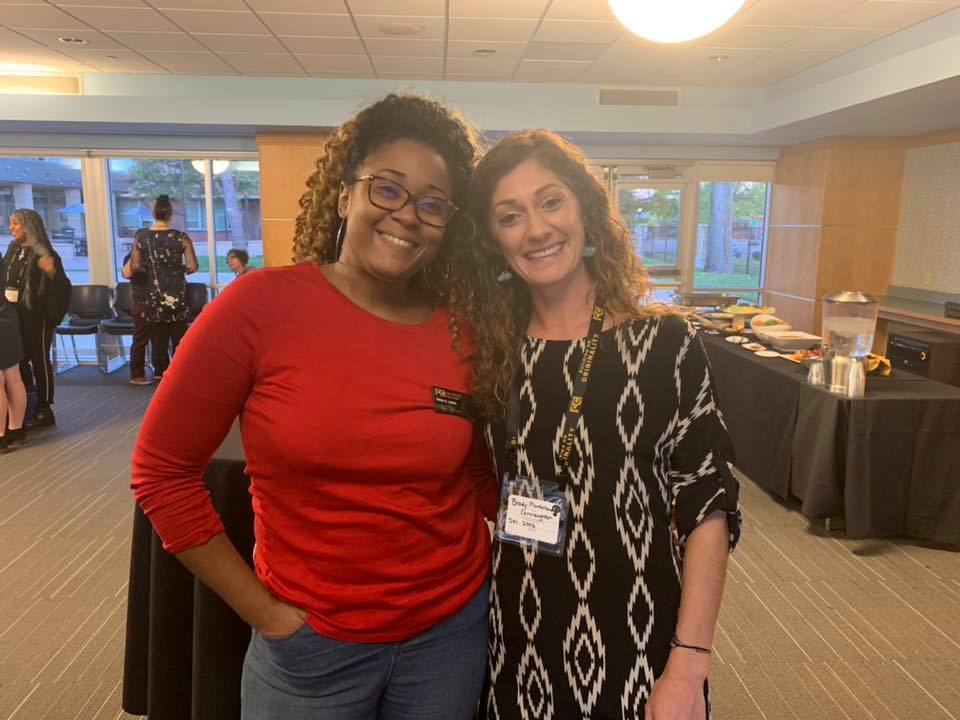
Brady is pictured above with Dr. Heidi R. Lewis, Director and Associate Professor of Feminist & Gender Studies, after giving her keynote address at the Feminist & Gender Studies 20th anniversary Homecoming celebration in 2018. To watch Brady’s keynote address, click here. To read a transcript, click here.
show all / hide all