
Explore More Academic Programs
- Anthropology
- Art
- Asian Studies
- Biology
- Chemistry & Biochemistry
- Chinese Program
- Classics
- Comparative Literature
- Department of Chinese, German, Italian, Japanese and Russian Studies
- Economics & Business
- Education
- English Department
- Environmental Studies and Science
- Feminist & Gender Studies
- Film and Media Studies
- French
- Geology
- German Studies
- History
- Human Biology and Kinesiology
- Italian Program
- Japanese Program
- Mathematics & Computer Science
- Molecular Biology
- Music
- Neuroscience
- Organismal Biology & Ecology
- Philosophy
- Physics
- Political Science
- Psychology
- Race, Ethnicity, and Migration Studies
- Religion
- Russian & Eurasian Studies
- Sociology
- Southwest Studies
- Spanish & Portuguese
- Theatre and Dance
Economics and Business
Economics & Business on the Block
EC241: The Economics of Sports
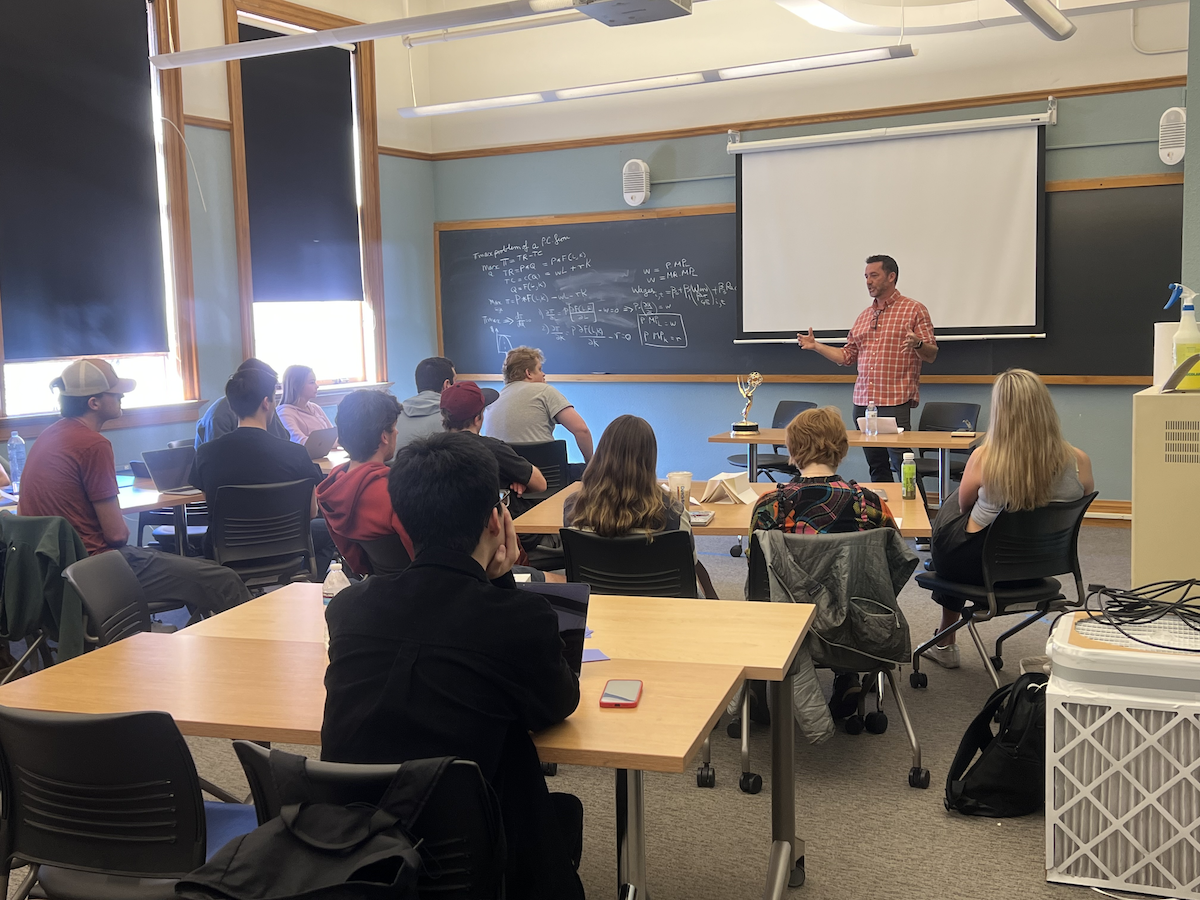
The Economics of Sports focuses on the application of theory and basic econometrics in professional, collegiate, and recreational sports. Students will develop various skills in order to analyze various arguments that are related to sports economics. This class familiarizes students with sports economics models. They will develop analytical and quantitative skills in order to evaluate arguments based on economic models as they pertain to the issues concerning sports. The class features executives from the world of sports and a field trip to Coors Field.

EC348: Economics of Innovation
This is a creative process course, that studies how others create/innovate so that students can practice creativity themselves within the field of economics/business to discover their own best practices. We discuss not only how professional inventors create, but how they are supported, regulated, or deterred, both intentionally and accidentally. Students analyze the dangers of thoughtless and reckless innovation (with case studies), and focus on the importance of empathy for the consumer/user/audience. This class centers on the additional challenges of historically marginalized populations (since most inventors emulate innovators they know), coming to understand how the lack of role models, supporters, policymakers, and funding sources doubly disadvantages people of color and women. Students then build synthetic projects that tie literature and evidence to live interviews in the field with practitioners who help triangulate and brainstorm our own solutions to real, complex problems in our community. In short, it is an innovative course about innovation that teaches students how to innovate better.

BU205: Principles of Financial Accounting
This course is a foundation for the Business, Economics, and Society major and the Economics major in that it introduces students to the “language of business.” The course teaches students this business language while introducing them to the principles of financial accounting. At the end of this course, students understand the major accounting concepts and activities of business firms, how accounting data is recorded and reflected in financial statements, the key interrelationships among financial statements and how to analyze and interpret them, and the threats and safeguards to the integrity of accounting information and the kinds of ethical dilemmas that can arise. The broader impacts of accounting practices on the business and nonprofit sectors are also discussed, in addition to real-world applications including field trips to learn more about local businesses’ accounting practices.

Featured Alumni
Sayorn Chin
Pronouns: he/him
Graduation year: 2017
Hometown: Phnom Penh, Cambodia
Currently living in: Easton, PA
Current occupation: Assistant Professor of Economics (Tenure-Track), Lafayette College
What was your experience at CC like as an Economics major?
During my undergraduate years at CC, where I majored in Mathematical Economics, I thoroughly enjoyed the challenging courses developed by world-class professors who took their responsibilities seriously. From my experience, they considered it an honor to help shape my intellectual curiosity, not just by conveying subject matter but also by fostering a keen sense of critical thinking. I fondly remember Dr. Kat Miller-Stevens's Social Entrepreneurship class, which was both rewarding and challenging. In this course, I had the opportunity to collaborate with other students to develop social entrepreneurship start-up ideas that address relevant social issues we face today. This experience allowed me to incorporate theoretical frameworks from economics and other social science disciplines to critically understand the nature of the problems we aimed to solve. Additionally, industry experts visited our class to share their experiences, further connecting our study of economics to the real world.
Lilly Chen
Pronouns: she/her
Graduation year: 2019
Hometown: Hillsborough, NJ
Currently living in: Philadelphia, PA
Current occupation: Startup founder
What was your experience at CC like as an Economics major?
I loved being a Math Econ major at CC. My favorite class was an upper level behavioral economics class where we conceived, executed, and published a paper with an original thesis as a team. It was the quintessential experience because I learned so much about myself, how I work with others, and how to get a project across the finish line.
Saigopal Rangaraj
Pronouns: he/him
Graduation year: 2023
Hometown: Gaborone, Botswana & Mumbai, India
Currently living in: Denver, CO
Current occupation: Associate Consultant, Bain & Company
What was your experience at CC like as a Mathematical Economics major?
I enjoyed majoring in Mathematical Economics as I could take theoretical courses as well as others that were more applied. This mix allowed me to learn many different skills while also being able to pace myself and explore the fantastic opportunities CC provided outside of the classroom. These opportunities included various grants that helped me explore things like religious decline in the Caribbean, art auctions in LA, and voting patterns in the U.K. I also studied abroad at the London School of Economics, worked on a startup, and took advantage of various volunteer positions and research opportunities with the State of The Rockies. My time at CC was greatly influenced by the people I engaged with, the classes I took, and the immense wealth of knowledge I engaged with inside and outside the classroom.
Cassandra Benson
Pronouns: she/her
Graduation year: 2012
Hometown: Pocatello, ID
Currently living in: Colorado Springs, CO
Current occupation: Assistant Professor of Economics at the United States Air Force Academy
What was your experience at CC like as an Economics major?
The economics major was an amazing experience for me. The CC faculty and my peers in the Economics department created a community that was welcoming and supportive. I’m quite introverted and I often struggled to speak up in class. But that never deterred the faculty from making sure I was included and recognized. Kristina Acri would hold office hours in the morning before class so I could ‘participate’ one-on-one. In the summer before my senior year, Dan Johnson saw me walking back from the library and offered me a summer research position on the spot. Esther Redmount helped me turn my thesis into an academic paper for peer review. Kevin Rask championed me going to graduate school to study the economics of education. And Nancy Heinecke kept me awake with my daily mid-morning candy. The faculty were always present and ready to help me achieve my goals. I think the Economics major enabled me to define who I am and what I want to achieve. I can unequivocally say, my experience in the major was overwhelmingly positive.
Explore Our Programs
Economics
The objective of the Economics major is to develop a general knowledge of how economies function to allocate scarce resources. By applying economic theories of decision-making and coordination to public policy issues, students will gain an understanding of the operation of the United States and other economies and their interactions. Specialization in economics is valuable to students who intend to enter business or government service. For many positions with federal or state governments, training in economics or related social sciences is required. Moreover, undergraduate specialization in economics is the first step for students who wish to make a career of teaching economics at the collegiate level or who wish to secure positions as professional economists. To hold such positions, graduate study of economics is usually required.
This major also shapes effective citizens by promoting knowledge of structures and processes central to democratic society in a global age and by addressing issues of economic inequality and social injustice. This goal contributes to the college’s commitment to the liberal arts, and it reinforces the college’s antiracism agenda and its efforts to promote diversity, equity, and inclusion.

Business, Economics, and Society
The Business, Economics, and Society major expresses the interdisciplinary nature and commitments of the Economics and Business Department. It builds on the commonalities and differences in the two disciplines as they study human economic behavior—its nature, its sources, and its consequences.
The major analyzes three key relationships. First, it examines the roles business and economics play in society, particularly the place of modern corporations and social enterprises in civil society, government, and economic policy. Second, it evaluates the impact of business on society, focusing on market forces, market failures, and services provided to all members of society. Third, it explores the effects of society on business and the economy, questioning how social issues frame business opportunities and strategies, and how corporations respond (or fail to respond) to social concerns.
By promoting knowledge of structures and processes central to democratic society in a global age, this major shapes effective citizens. Through this goal and its emphasis on interdisciplinary thinking, the major contributes to the college’s commitment to the liberal arts. It also addresses issues of economic inequality and social injustice, and in so doing reinforces the college’s anti-racism agenda and its efforts to promote diversity, equity, and inclusion.

Learn more about the Business, Economics, and Society Major!
Mathematical Economics
Students majoring in Mathematical Economics must successfully complete no fewer than 16 units of listed courses in Mathematics and Economics, including a senior thesis. To solidify basic problem-solving skills, all majors must initially take a common set of required courses in economic theory, calculus, statistics, and linear algebra. Contingent on individual course prerequisites, students may then directly fulfill the elective requirement which undertakes a more advanced treatment of mathematical economics, or complete a sequence of courses that provide exposure to the statistical modeling of data. This major provides strong training for students pursuing private sector careers in investment banking, forecasting, applied mathematics, or finance, as well as graduate work in economics, operations research, and financial engineering.

International Political Economy
The International Political Economy major prepares students for careers in government, international organizations, international business, or private foundations. It lays the groundwork for further study in international economics and politics and for constructive citizenship in a world of increasing interdependence. The major is designed for students with broad interests in international studies.
This major focuses on the interaction between politics and economics in comparative and international settings. It examines the possibilities and constraints furnished by social structures, institutions, ideologies, and cultures within and across societies, and it looks at the interplay of economic and political forces in the world arena. Students are introduced to the field in their junior year when they take Introduction to International Political Economy, a course emphasizing theoretical foundations. They draw upon this body of theory as they undertake a research experience during their senior year.

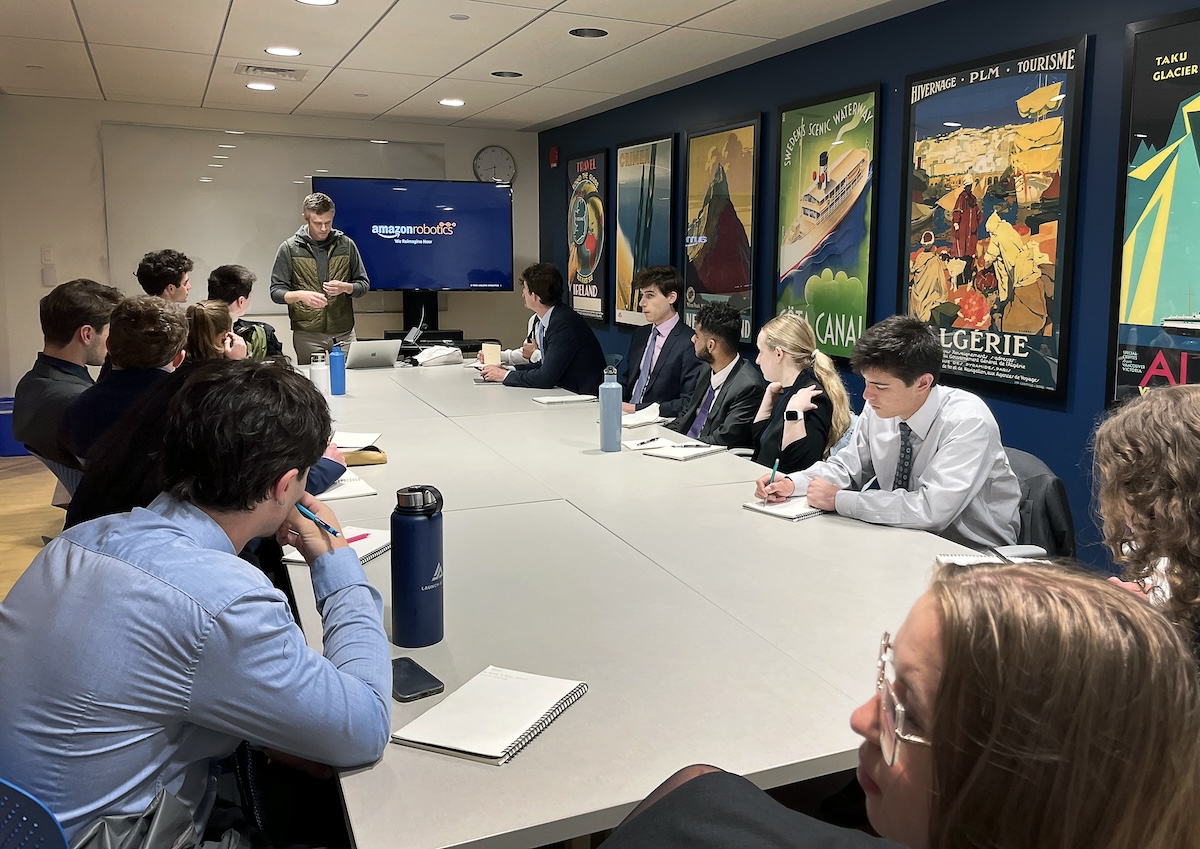
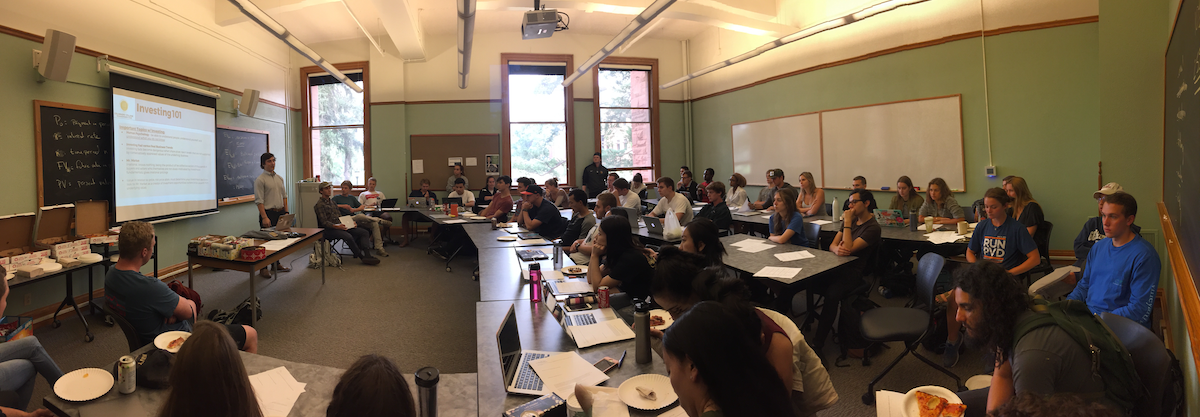
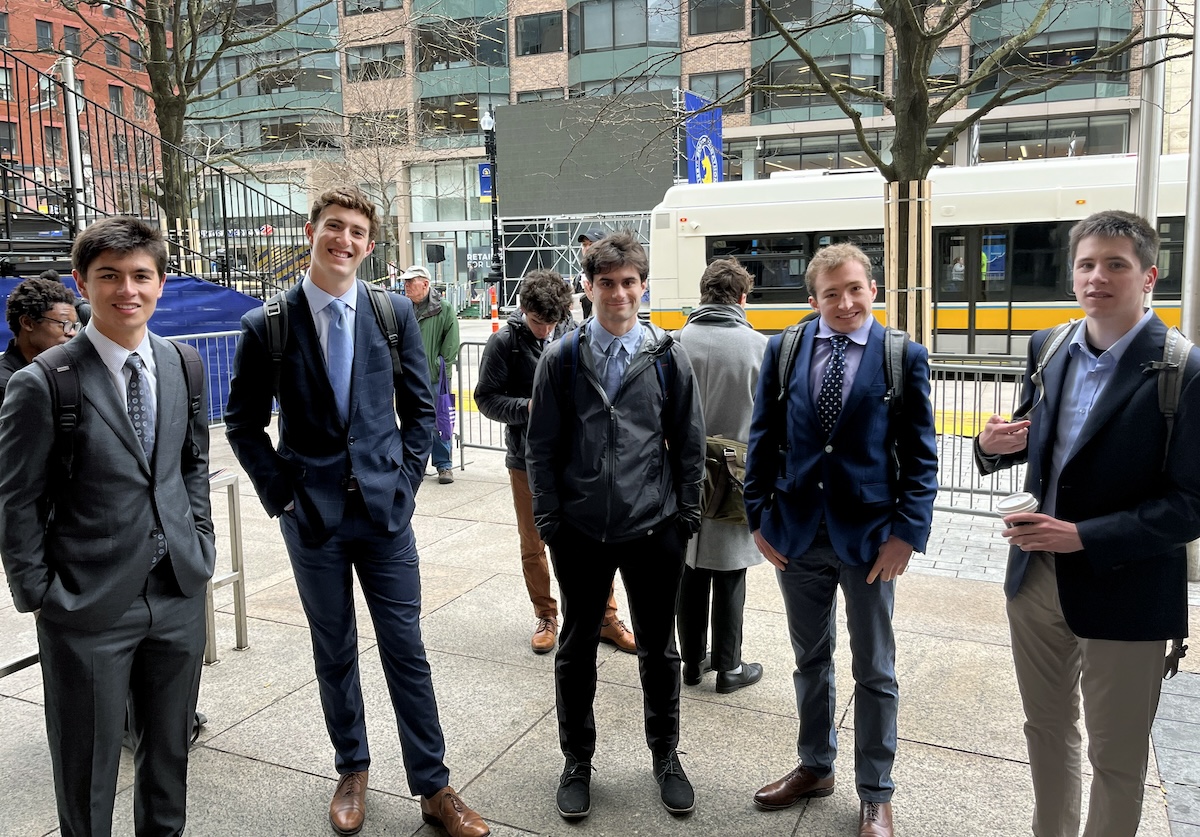
The Economics & Business Department offers four majors including Economics, International Political Economy, Mathematical Economics, and Business, Economics, and Society. After graduation, our majors often work in the business, nonprofit, or government sectors or they move on to graduate school, earning master’s degrees and PhDs in disciplines such as Business Administration or Economics and Public Policy. Our courses focus on theoretical and foundational skills as well as experiential learning with guest speakers and off-campus opportunities where students can apply their knowledge in real-world settings.
Contact Us
Nancy Heinecke
Academic Administrative Assistant
nheinecke@coloradocollege.edu
(719) 389 – 6407
Mailing Address
Department of Economics and Business
14 E. Cache La Poudre St.
Colorado Springs, CO 80903
Address & Map